If you haven’t yet, navigate to the App Store (iOS) or Play Store (Android). This guide will follow the.
- Daily Routine Mac Os 11
- Daily Routine Mac Os Download
- Daily Routine Mac Os Catalina
- Daily Routine Mac Os X
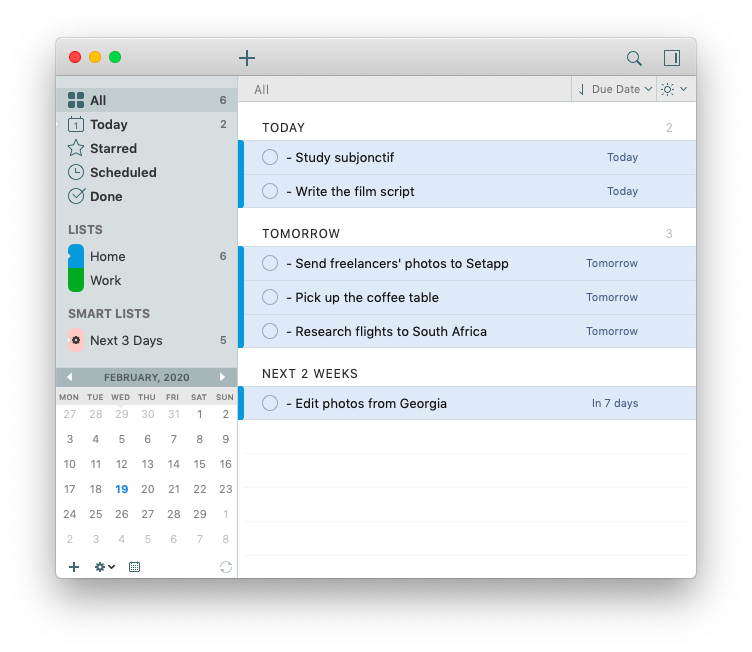
- Launch System Preferences. You can find it by selecting Apple Menu System Preferences. Click the Software Update Preference Pane. Choose Daily, Weekly, or Monthly from the Check for updates.
- This document is a Mac OS X manual page. Manual pages are a command-line technology for providing documentation. You can view these manual pages locally using the man(1) command. These manual pages come from many different sources, and thus, have a variety of writing styles.
- Mac OS X is designed to run certain maintenance routines daily, weekly, and monthly – but can’t if your Mac is off or asleep. Unreliable Macs, future Apple CPUs, replacing a Mac Plus mouse, and more, Dan Knight, Low End Mac Mailbag, 2008.08.12.
I recently attended the awesome SANS DFIR, Mac and iOS Forensics and Incident Response course with Sarah Edwards. This has obviously given me lots of great inspiration on how to negotiate Mac analysis in general and to take a closer look at some of those system files that we covered in training.
I’ve spent a little bit of time digging through the log files on my MacBook (Mojave 10.14.2). I’m sure this isn’t new to most practised Unix beards but for those who aren’t aware, there’s a really great little log file called daily.out in /var/log. I had previously given little credence to this log but realised it can be used to determine a whole wealth of useful information. I also reviewed the weekly.out and monthly.out files but these were, in my case, far less granular.
At a high level daily.out contains information relating to disk usage and networking, this file is written at least daily and the configurations for all three of the periodic logs are stored in plist files in the following location:
/System/Library/LaunchDaemons/com.apple.periodic-*****.plist
After reviewing the content of this file, it made me consider how this might assist in some of my casework?
Disk Usage
Firstly, I borrowed some grep skills from a very knowledgeable and tall colleague on my team to see if we could parse out just some specific information from the daily.out file. We extracted the lines only containing the dates, followed by the lines which related specifically to disk usage.
From this, we were able to find entries dating back as early as 3 months, and that the log contains:
- Logical volumes mounted at the time entries are written
- Size of volumes
- Space used on volumes
Daily Routine Mac Os 11
As you can imagine, disk volume information will be highly valuable in showing drives or images which were attached when the log was written and especially if you know the volume name used by a device you’re looking to prove access to.
We can also ascertain some other information from this log which is quite valuable.
Bootcamp!
You may have an instance where a suspect, subject or general bad person is saying they have never used their Bootcamp install, however, you can see from the Bootcamp disk usage that the volume is being written to and from regularly. Perhaps a big chunk of data has been deleted before a date of interest?
Uptime
Another interesting piece from the daily.out file is that it will show uptime of the system when the log entries are written. This could help prove whether or not the system was switched on and in use over a specific period.
This may also show some interesting information about account usage on the computer. As Mac computers generally tend to be used by individuals, this means there’s usually only ever one account logged on at any time. If you have an experienced user who is elevating to root every day, then seeing multiple accounts logged on may not be uncommon. Although, if an inexperienced user who has no knowledge of the root account, is logged on many times when another account is logged on, it may be suspicious or warrant further analysis.
Again, we extracted the lines from the daily.out file we are interested in using a simple grep command:

As you can see we can pull some interesting information about computer and account usage:
- Shows uptime of the system at the point in which the daily.out entry is written
Daily Routine Mac Os Download
- Also shows the number of users logged on, remember this is usually going to be one
There are also some very useful network interface statistics listed in this file which are probably more relevant to IR investigations but we may look at these another time.
Reference:
Daily Routine Mac Os Catalina
It’s Thanksgiving day here in the U.S., and I want to wish all our U.S. readers a happy holiday. Since Thanksgiving falls on a Thursday, which is also a Mac Gems day on the Macworld calendar, I thought I’d mention a few Gems I’m thankful for—the inexpensive apps and utilities that I use every day to increase my productivity and generally make my Mac-using life a bit better.
This isn’t a list of our all-time favorite Gems; we published the most-recent version of that list back in June (although some of those products appear on this list, as well). Nor is it a list of my favorite Gems of 2009; you’ll see that one the week we publish our annual Eddy Awards. Rather, this is a list of Gems that I continue to use every day—Gems that have become such an integral part of my workflow that I often take them for granted.
To the developers of these programs, and of the many other great-but-inexpensive software titles out there, thank you. The Mac experience is better because of you.
DocumentPalette: I use DocumentPalette many times each day to create a new document in the current folder via a keyboard shortcut—I just choose the type of document from the palette that appears.
Dropbox: Over the years, I’ve tried many methods for keeping particular files in sync between my computers, and for sharing files with friends and family. Dropbox, with its Finder integration and automatic syncing, makes it easy.
FlexCal: Flexcal lets me create new iCal (or BusyCal) events without having to open my calendar program. I just press a keyboard shortcut and provide the event details.
Growl: More and more of my favorite programs take adantage of Growl to provide notifications and updates. Throw in HardwareGrower, a Growl add-on that informs me of hardware and network connections and disconnections, and my Mac feels lacking without this utility.
Jumpcut: As a writer, I consider a multiple-Clipboard utility to be a must, and Jumpcut remains my personal favorite for its ease of use and elegant interface.
LaunchBar: Jason Snell put it best: “If I could have only one Mac utility, a solitary piece of software that I could use to improve using my Mac and all its programs as I went about my daily business, it would be Objective Development’s LaunchBar. When I use a Mac that doesn’t have LaunchBar running, I simply feel naked.”
MagiCal: Snow Leopard finally lets you put the date in the menu bar, but I still prefer MagiCal, which instead uses a tiny calendar icon for the date; clicking on the icon displays a useful monthly calendar.
Mercury Mover: Among this add-on’s many features, the one I use the most is the capability to quickly restore windows to particular sizes and positions. For example, by pressing Mercury Mover’s keyboard shortcut followed by S, my Safari window is instantly placed in my favorite location with my favorite dimensions.
MondoMouse: I use MondoMouse dozens of times each day to move and resize windows without having to grab a thin title bar or a tiny resize box—heck, without even having to click a mouse button.
ScreenSharingMenulet: Using OS X’s Screen Sharing feature between my Macs has become a regular part of my daily routine, and ScreenSharingMenulet has made making those Screen Sharing connections simple.
Sharpshooter: Tech writers take screenshots—lots of screenshots. When I choose to use Mac OS X’s built-in screenshot features, Sharpshooter lets me choose, on the fly, the screenshot format, name, and save location.
Shimo: Mac OS X’s built-in VPN functionality doesn’t hold a candle to Shimo, which provides more features, more-reliable connections, and many automation options. It’s also a much-improved alternative to Cisco’s OS X VPN software. Did I mention it provides Growl notifications?
SuperDuper: I’m paranoid about data loss, so I have a rigorous backup routine. Part of that routine is to use SuperDuper to schedule six clone operations every day—two each of three different drives. If a drive dies, I can be back up and running without much delay.
TextExpander: In my line of work, a text-expansion utility—which automatically pastes frequently used text whenever I type a corresponding abbreviation—is up there with multiple Clipboards in terms of productivity gains. And TextExpander is my current favorite. According to the program’s own tally, I’ve expanded over 5500 snippets over the past couple years.
Today: Today shows me the day’s events and tasks in a space-saving window, even if iCal or BusyCal is closed.
Witch: OS X lets you switch between windows in the current program by pressing Command+`. Witch puts that feature to shame by displaying a list of every window in every application, letting you easily switch to—or act on—any of them.
Daily Routine Mac Os X
There are plenty of other Gems that I use regularly, but these see daily action on my Mac and have worked their way into my routines. What are your most-used—and most overlooked—Mac Gems? Let us know in the comments. And if you’re celebrating today, have a great Thanksgiving, and thanks for reading.
Want to stay up to date with the latest Gems? Sign up for the Mac Gems newsletter for a weekly e-mail summary of Gems reviews sent directly to your Inbox.